Featured

Mission Creek/PCT Loop

Trip Report/Trail Guide – 11/29/2019
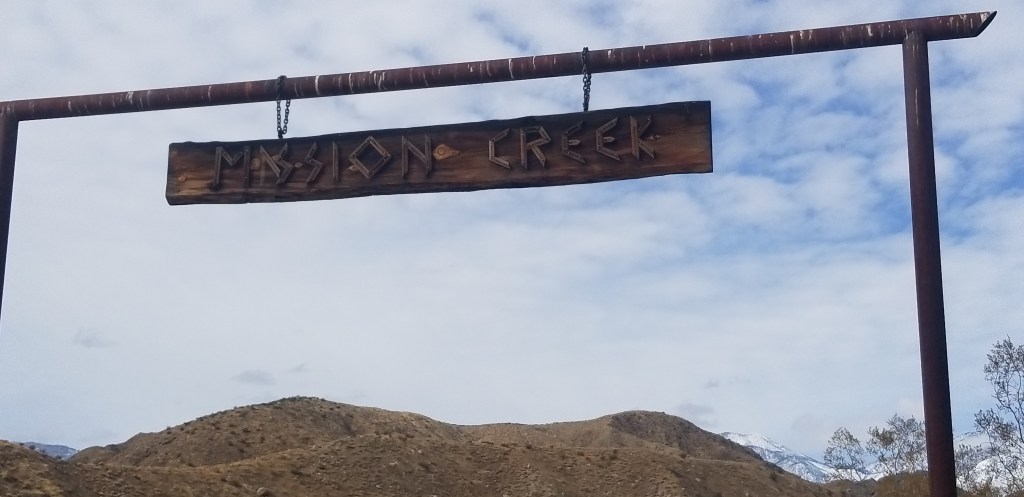
This was my first trip to the Mission Creek Preserve, which is adjacent to the Whitewater Canyon Preserve. Parking is about 1.5 miles up a good dirt road, Mission Creek Rd. When I arrived, I saw two hikers who had just returned to their vehicle. For most of the hike, I was completely alone. Passing the gate, the first mile of the hike runs mostly parallel to Mission Creek along Mission Creek Road.
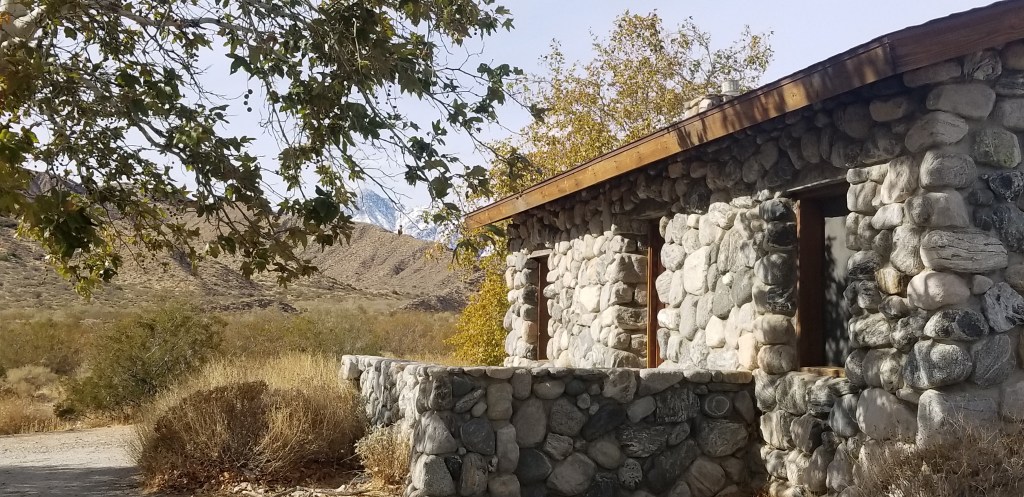
At the first mile, I reached the stone house, an abandoned cabin that has been rehabilitated by the Wildlands Conservancy. Immediately following the stone house is a junction between Mission Creek Road and a spur route to the Pacific Crest Trail. After this junction, the distance to the PCT is about two miles. The first point of interest I visited on the spur trail was a desert wetland area, replete with live oaks, desert willows, and wild grapevines.
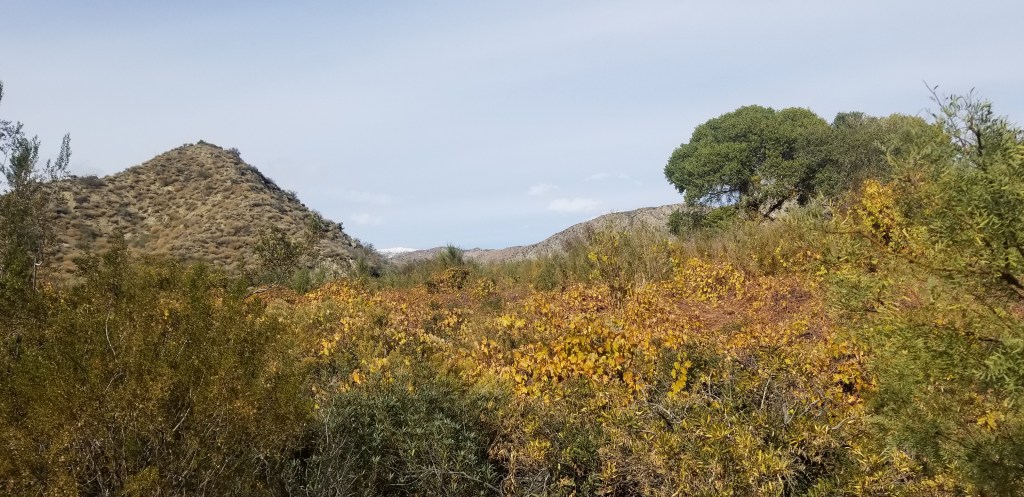
As the trail continues up through a tributary wash to Mission Creek, the canyon walls open up to a grand view of the San Gorgonio high country. The snowline here seemed tantalizingly close, but it was still several trail miles away, and several more hundred feet in elevation above. At the junction of the PCT, the Whitewater Preserve is six and a half miles on the southbound route to the left. I took the fork to the right, the northbound PCT, which snakes it’s way up to the top of gently sloping bench. Here the views were expansive and panoramic, with seemingly every mountain in sight attired in a silvery, snowy gown.
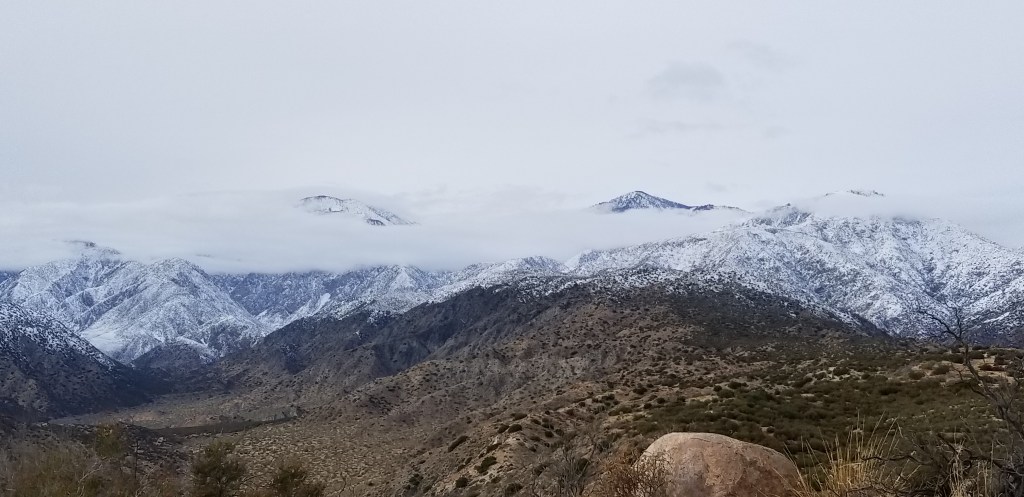
The PCT follows this bench for approximate a mile and a half to an elevation of 3700 feet. It was here where I saw my first patches of snow. Satisfied that I had accomplished what I had set out to do, I continued down the PCT as it descended back down into Mission Creek Canyon. Here I met back up with Mission Creek Road, which returns back to the stone cabins. Beer in hand, a picnic bench seemed to invite me to rest my weary feet. As I approached, a sign sternly warns approaching hikers that they are crossing onto private property. I continued past the sign, perhaps in spite of my better judgment, but there were no signs of humans or human habitation. Continuing down the road, I ventured through an unusually dense stand of deciduous oak woodland.
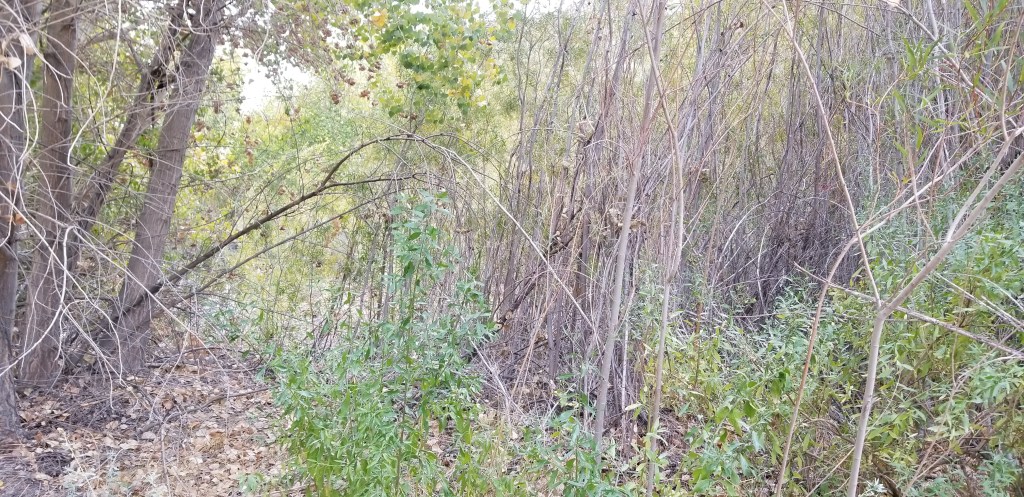
As I criss-cross the creek, nightfall was upon me. I snapped one last photo of a lone palm tree posing against the sunset, satisfied with my adventure.
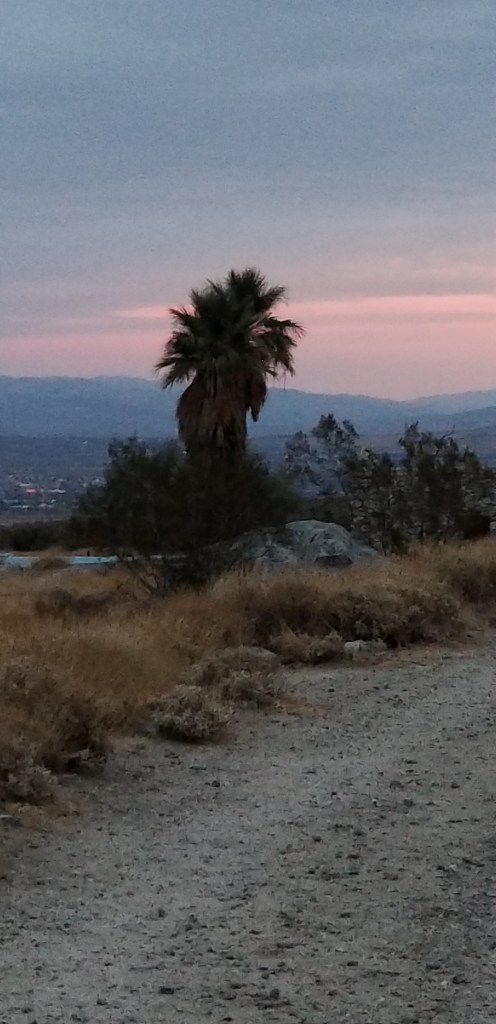


Total distance, 12 miles; elevation gain, 1600 feet; total duration, 6 hours
Kehl Canyon

Trip Report/Trail Guide – 6/1/2019

One not always need to look far from home to find seemingly unknown hiking destinations. One such place is Kehl Canyon, which lies in the foothills of the San Bernardino mountains between Cherry Valley and Calimesa. My discovery of Kehl Canyon came about during some random Google Earth browsing. A stumbled upon a point of interest labeled “Kehl Canyon” trailhead. I found very little information about the trail online so I consorted another app, OffRoadX, which displays the boundaries between county, state, and federal lands and private properties. According to the app, most of Kehl Canyon is public land, owned by Riverside County.

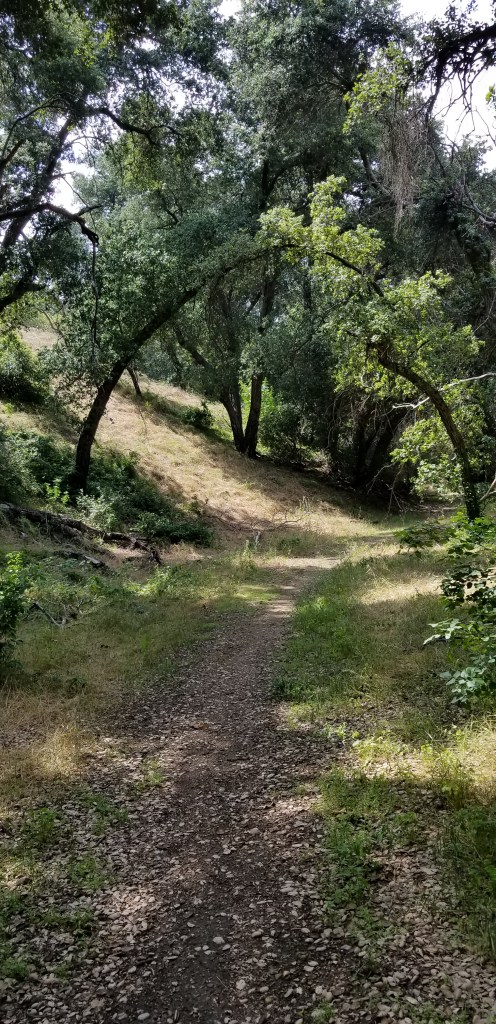
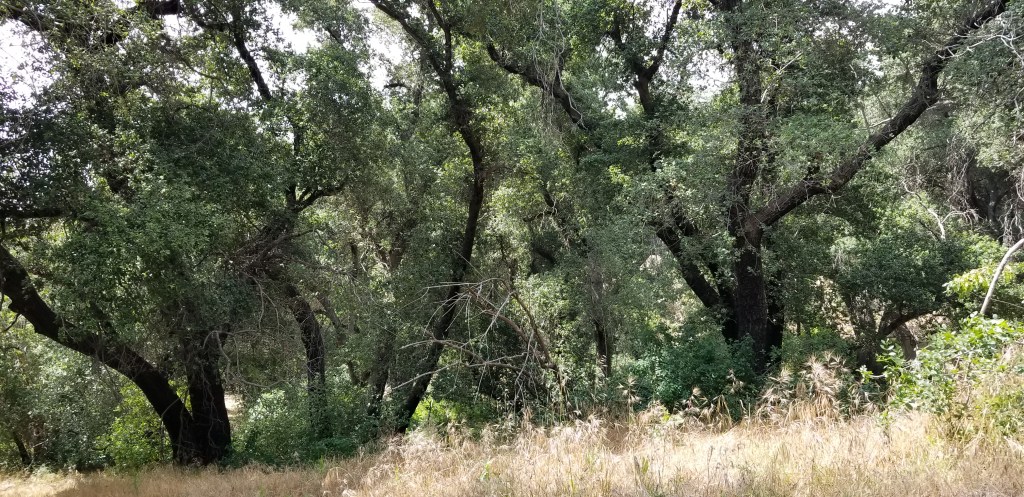
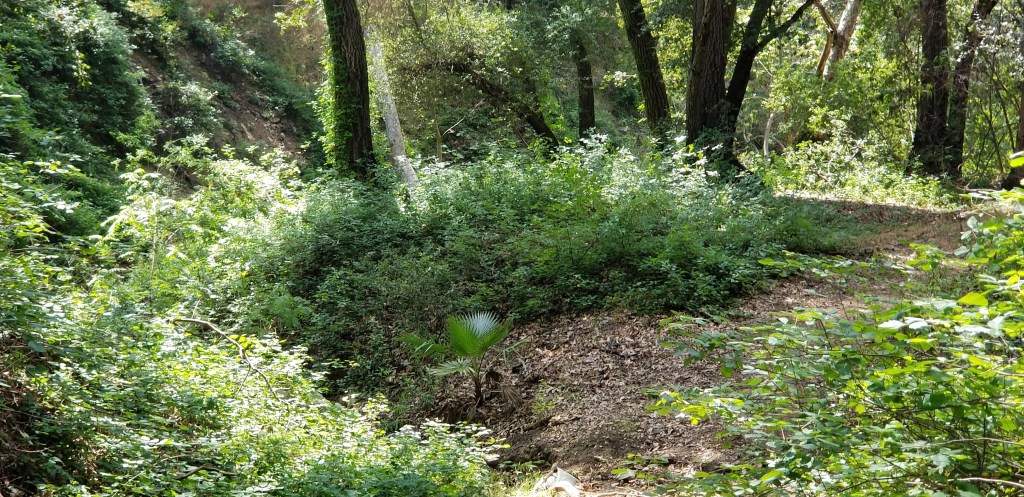
I took a trip over there to investigate further. The trailhead is located right off Singleton Road in Calimesa. Following the street past a retirement community, it turns into a dirt road that’s accessible to passenger vehicles. I located the trailhead, which was more or less an inconspicuous dirt lot next to the ruins of a graffiti’d and trashed abandoned home. I’m always a little leery of venturing into these kinds of places alone but I forged ahead anyway. I walked past the abandoned home, and through a break in an old, broken down fence. The sign on the fence warned that the trail was closed to vehicles, but it didn’t mention hikers! I pressed forth and found myself in one of the darkest, dankest riparian woodlands I’d ever seen in this part of the San Bernardino foothills. It was already well into June and the ferns were still a lush green, fed by springs which still flowed. High above the understory of ferns and poison oak towered some magnificent live oaks, which may be some of the largest I’d ever encountered in my journeys. I traversed the canyon by way of an abandoned dirt road.

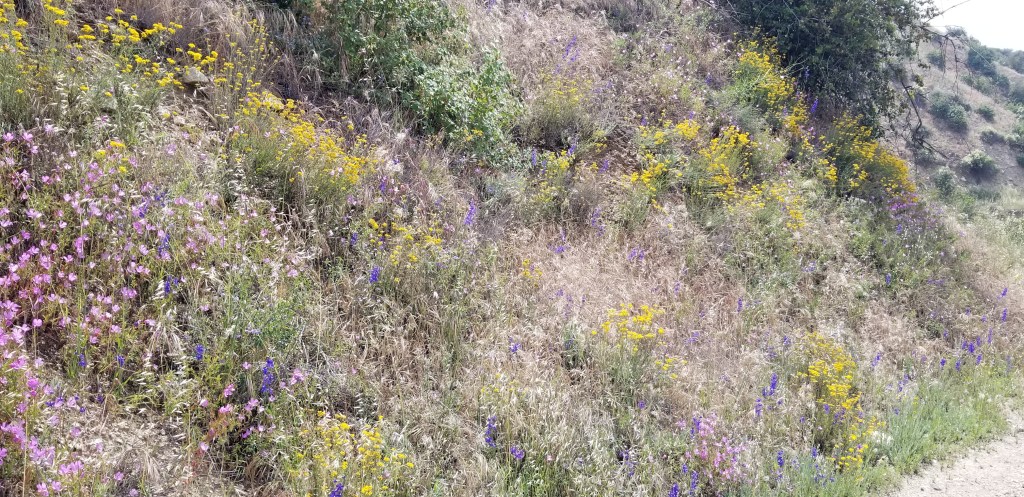
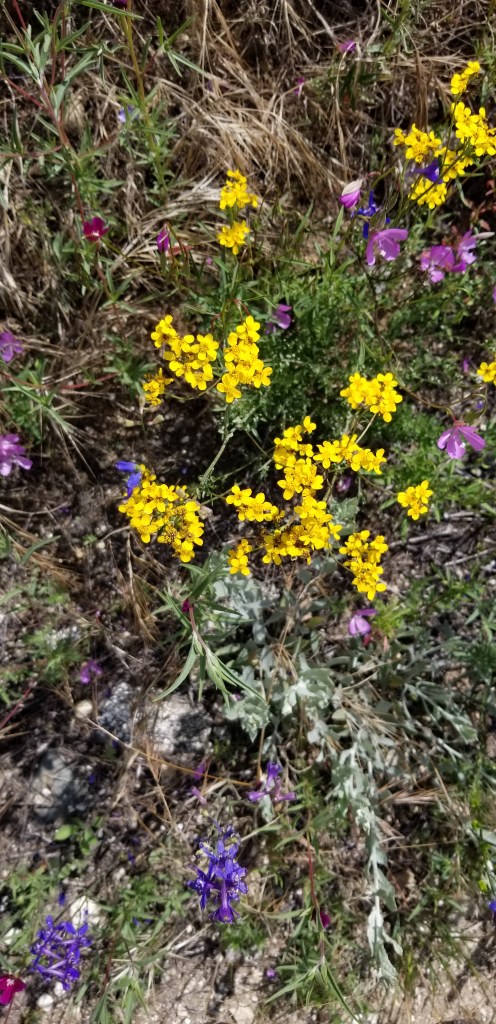
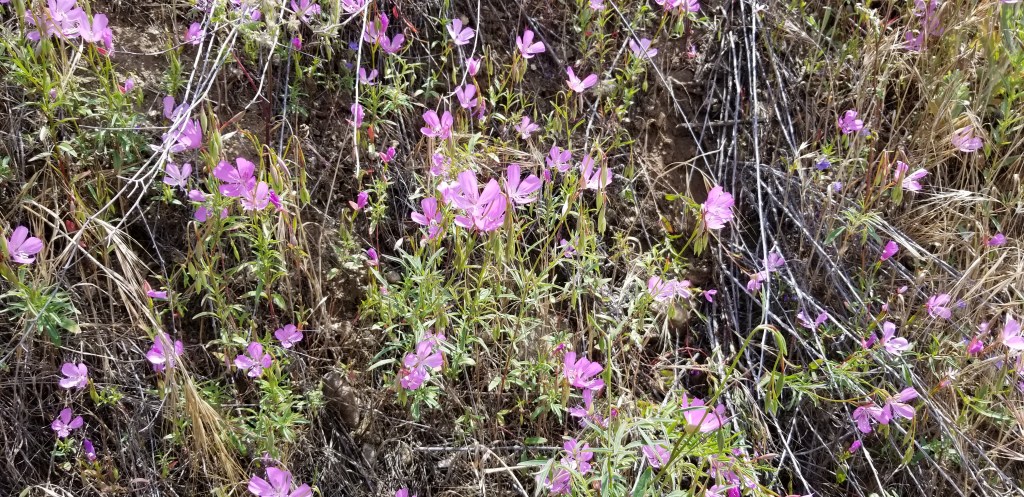
After about a half mile under the cover of trees, the trail emerges from the forest and contours around the side of the canyon. Here I was greeted by a riotous display of colorful flowers thanks to the plentiful winter rains.

At about three miles, the road joins with other more established dirt roads and ATV paths at a saddle in the hills that provided excellent views of Yucaipa Ridge immediately to the north and the undulating San Timoteo Badlands, with a still snow capped San Jacinto looming in the background. This was my turnaround point. I noticed that there were other trails that rimmed the inside of the canyon and climbed into the nearby hills, beckoning me for a return visit!

Distance, 7 miles out and back; elevation gain, 600 feet, total duration, 3 hours

Welcome, fellow travellers!

My name is Nicholas Thomas, and I’ll be your guide on The Trail Less Traveled! There are many wonderful hiking blogs that document Southern California’s most popular hikes. With this blog, however, I seek to share with you, dear reader, the pleasures to be had exploring Southern California’s lesser known trails.

On this blog, we’ll discover hidden natural gems, long forgotten but storied historical sites, and natural and manmade curiosities from the desert to the forests, valley deep and mountain high! Join me, if you dare!

Design a site like this with WordPress.com
Get started